

Yard Sign
Yard Sign
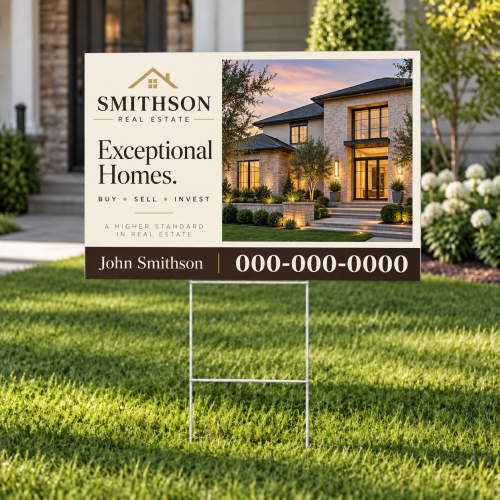
Realty Sign
Portable A-Frame (Standard)

Portable A-Frame (With Rider)

Real Estate Frame
Real Estate Frame(Standard)
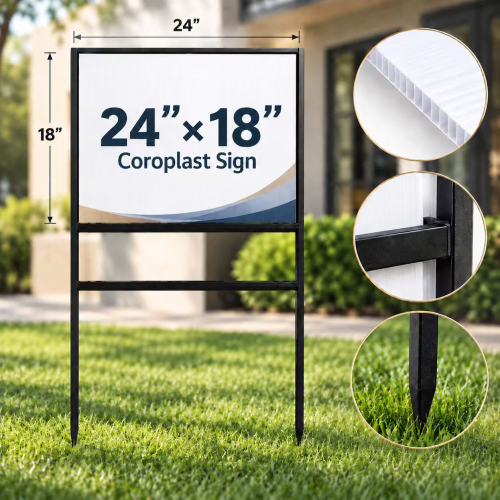
Real Estate Frame (With Rider)
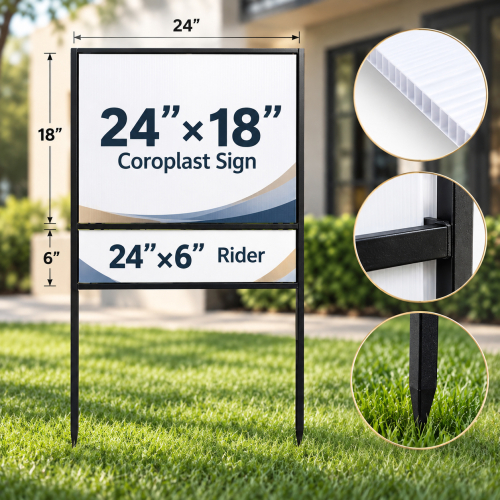
Wholesale Custom Real Estate Signs & Sign Frames for Trade Buyers
Custom real estate signage combines property information, agent branding, and a display structure suited to the location. Printed panels carry the message, frames and stakes provide support, and rider panels add supplementary details. Choosing the right combination involves more than selecting a sign size: the marketing purpose, component fit, artwork layout, outdoor conditions, and purchasing schedule all matter.
For agencies, print shops, sign shops, and resellers, these decisions connect individual signs with the wider needs of a property marketing campaign.
What Custom Real Estate Signs and Sign Frames Does 777Sign Offer?
777Sign offers custom Coroplast yard signs, portable real estate A-frame signs, and real estate sign frames. The A-frame and real estate frame ranges each have Standard and With Rider product listings, giving trade buyers five product options across three groups.
Custom Coroplast Real Estate Yard Signs
Custom Coroplast yard signs provide a printed panel for property listings, agent identification, and real estate directions. 777Sign prints these signs in full color on white fluted plastic, with an optional steel H-stake for suitable ground-mounted applications.
The panel carries the artwork; the stake supports it at the site. Buyers can plan a panel around a brokerage logo, listing message, agent name, or contact information, then select the appropriate size and available printing options. An H-stake is a configuration choice rather than something to assume is included with every panel order.
This category suits buyers sourcing printed property signs without committing to an A-frame structure. The support requirements still depend on where and how the panel will be displayed.
Portable Real Estate A-Frame Signs
Portable real estate A-frame signs combine printed graphics with a freestanding display format that can be moved between locations. 777Sign lists both Portable A-Frame (Standard) and Portable A-Frame (With Rider).
The main panel presents the primary message. A rider adds a separate area for supplementary information, such as an open house announcement or an agent detail. Buyers can use these configurations when planning temporary property displays that need to be brought out, repositioned, and collected.
Select the product listing that matches the intended layout, then verify the printed panels and hardware in the order. A product name alone does not establish that every attachment or accessory required for a particular setup is included.
Real Estate Sign Frames
Real estate sign frames support printed property panels in a ground-mounted structure. 777Sign lists Real Estate Frame (Standard) and Real Estate Frame (With Rider), with product descriptions identifying black powder-coated steel construction for installation in suitable soft ground.
The frame and the printed panel perform different jobs: one holds the display in place, while the other communicates the listing or agent information. A rider configuration provides an additional message area.
For a new property display, review the complete configuration. For an existing frame, confirm the panel requirements before arranging a replacement print. Keep the frame, main panel, rider, and any separate fittings identifiable in the order specifications.
Which Real Estate Sign Format Fits Your Property Marketing Needs?
Choose a real estate sign format by matching the marketing task with the display location, mobility needs, and expected information changes. A sign identifying a listed property has different requirements from a temporary arrow directing visitors to an open house.
Yard Signs for Property Listings and Agent Identification
Yard signs suit property-level messages that identify a listing and connect it with an agent or brokerage. A focused design can communicate “For Sale” or “For Lease,” identify the representative, and provide a contact method.
Consider how people will approach the property. The viewing direction affects panel orientation and whether more than one printed face is needed. Available space and the intended support system also influence the size choice. Choose a layout that remains readable without filling every part of the panel.
Portable A-Frames for Open Houses and Directional Messages
Portable A-frames suit open house announcements and directional messages that need temporary placement and collection. Their movable format can support an event schedule in which signs are deployed before visitors arrive and removed afterward.
Plan the route and sign positions before deciding quantities. A sign at the property entrance may need different wording from a sign at an earlier decision point. Each position also needs a suitable surface and enough space for the display without obstructing access.
Framed Signs for Recurring Property Marketing
Framed signs suit property marketing programs that use a supported main panel and may require later graphic changes. An agency can plan consistent panel specifications across compatible frames, making subsequent purchasing easier to organize.
Reuse depends on the frame’s condition and the fit of the new panel. A familiar nominal size does not prove compatibility with every frame in an agency’s inventory. Record the actual system requirements when establishing a repeat-order specification.
How Do You Match Real Estate Sign Panels, Frames, and Riders?
Match panels, frames, and riders by checking dimensions, thickness, orientation, and attachment requirements together. Compatibility depends on the complete connection between components, not simply on a shared product label.
Panel Dimensions, Thickness, and Frame Fit
Panel fit depends on the size and thickness the frame accepts, together with the way the panel is retained. Confirm the required finished width and height before preparing artwork or ordering replacements.
The outside dimensions of a frame are different from the dimensions of the panel it holds. The visible area may also be smaller than the full printed panel where a frame overlaps its edges. These measurements serve different purposes and cannot substitute for one another.
For Coroplast used with an H-stake, flute orientation also matters. The stake must enter the appropriate channels, so the panel’s intended upright orientation needs to be established before production.
Rider Size and Attachment Compatibility
Rider compatibility depends on both the panel dimensions and the receiving structure or fittings. Matching the width of the main sign does not establish that a rider will attach correctly.
Confirm where the rider sits, how it is secured, and which parts are required. When replacing a rider on an existing display, use the specifications of that particular system. Avoid assuming that a standard frame accepts any supplementary panel or that fittings from another supplier will match.
Printed Panels, Hardware, and Replacement Components
A complete sign order accounts for the printed parts and the physical components needed to display them. Review the main panel, rider if required, frame or stake, and any necessary attachment pieces separately.
For replacement work, provide the existing system’s relevant specifications rather than only requesting a “real estate sign.” Check whether the needed component is available through the selected product configuration. This makes it easier to distinguish a print requirement from a complete display requirement before placing the order.
How Should You Design Real Estate Signs for Clear Property Messaging?
Design real estate signs around a clear primary message, recognizable agent or brokerage identification, and readable contact information. Use supplementary panels and separate artwork areas to organize details without competing with the main purpose of the sign.
Prioritize Listing Status, Agent Branding, and Contact Details
The most prominent information should reflect what the viewer needs to understand first. A listing sign may lead with the property’s availability, while an open house sign may prioritize the event message and direction.
Use a clear visual hierarchy through text size, contrast, and spacing. Keep secondary details subordinate to the main message. For a brokerage ordering across several agents, consistent logo placement and typography can provide a common layout while agent names and contact information change.
Review the design at its intended printed size. A layout that is readable when enlarged on a monitor may contain details too small for the planned viewing conditions.
Use Rider Panels for Supplementary Property Information
Rider panels provide a separate place for information that supplements the main sign. Examples include “Open House,” “Pending,” “Sold,” or a short agent-specific detail, depending on the property and the campaign.
Keep the rider’s role narrow. Repeating all the main panel’s information adds density without helping the viewer identify the new detail. When a compatible system allows panel replacement, separating changing information can help preserve a main design that remains relevant.
Before updating the message, confirm that the rider can be changed on the selected display and that the replacement fits its mounting arrangement.
Prepare Artwork for Frame Overlap and Two-Sided Viewing
Prepare artwork to the selected product’s finished dimensions and safe-area requirements, allowing for any frame overlap. Keep essential names, phone numbers, logos, and other critical information away from areas that may be covered.
For different front and back designs, identify the files clearly and check each side separately. Directional arrows require particular attention: an arrow that works from one approach may give the wrong instruction from the opposite side.
If a QR code is included for close-range viewing, test the code and its destination before submission. 777Sign requires customer-supplied, print-ready artwork; spelling, contact information, layout, and QR accuracy remain the customer’s responsibility.
What Should You Consider When Placing and Reusing Outdoor Real Estate Signs?
Outdoor placement requires a suitable support system, a usable viewing position, and attention to the condition of the display. Reuse also depends on whether the panels and hardware remain suitable for another installation.
Match the Support System to the Ground Surface
Match the support to the actual surface where the sign will stand. Ground-stake frames and H-stakes require suitable soft ground; a paved area needs a display designed to stand on that surface.
For a freestanding A-frame, allow room for its operating footprint and follow the product’s setup requirements. Position the display where its message can be seen while keeping entrances and pedestrian routes clear. Before placement, confirm applicable local and property requirements for the intended location.
Check Exposure, Stability, and Sign Condition
Check the complete display for stability and damage under the site’s conditions. Outdoor-suitable panel material does not establish a wind rating or guarantee that a sign will remain secure in every setting.
Look for loose connections, leaning supports, damaged panels, or a display that has shifted from its intended position. If conditions make the setup unstable, take the sign out of service until the problem is resolved. Choose another position or display configuration when the original location cannot support appropriate use.
Store Panels and Inspect Frames Before Reuse
Store panels so they are protected from bending, crushed edges, and pressure from other equipment. Keep compatible components organized together so the next installation does not depend on identifying loose parts at the property.
Before reuse, inspect the frame, stake, panel edges, and attachment points. Replace damaged components as needed and verify that the sign still shows the correct agent, contact details, property status, and direction. A structurally usable sign can still carry information that is no longer current.
How Can Trade Buyers Plan Real Estate Sign Orders Across Agents and Listings?
Trade buyers can plan real estate sign orders by connecting each artwork version with a product configuration, quantity, and required date. This is especially useful when a single purchase supports several agents, properties, or open house routes.
Organize Artwork Versions by Agent, Property, and Sign Type
Organize files so each version has a clear owner and intended use. Identify the agent or property, main panel or rider, printed side, and revision in the file name or accompanying order record.
Maintain a quantity list alongside the approved artwork. For example, an agent’s listing panel, a shared brokerage open house design, and a property-specific rider represent different production requirements. Review these relationships before submission and retain the final files for future reorders.
Separate Complete Display Needs from Replacement Print Needs
Separate new display requirements from replacement print requirements when calculating quantities and costs. A new listing location may need a complete support system, while an existing compatible frame may only need updated graphics.
Check the condition and specifications of available hardware before counting it toward the project. Confirm component availability and the selected order options, then compare costs using equivalent configurations, including the required printed parts, hardware, and delivery.
Coordinate Production and Delivery with Listing Dates
Coordinate the production schedule with the date the signs need to be installed. Work backward from the listing launch or open house, allowing time for artwork preparation, any required approval, production, shipping, and checking the delivered components.
Production and transit are separate stages. Confirm the available turnaround and shipping options for the actual order rather than treating a shipping service as a production commitment. For agencies and resellers, communicate the required arrival date clearly before promising a deployment schedule to the client.