
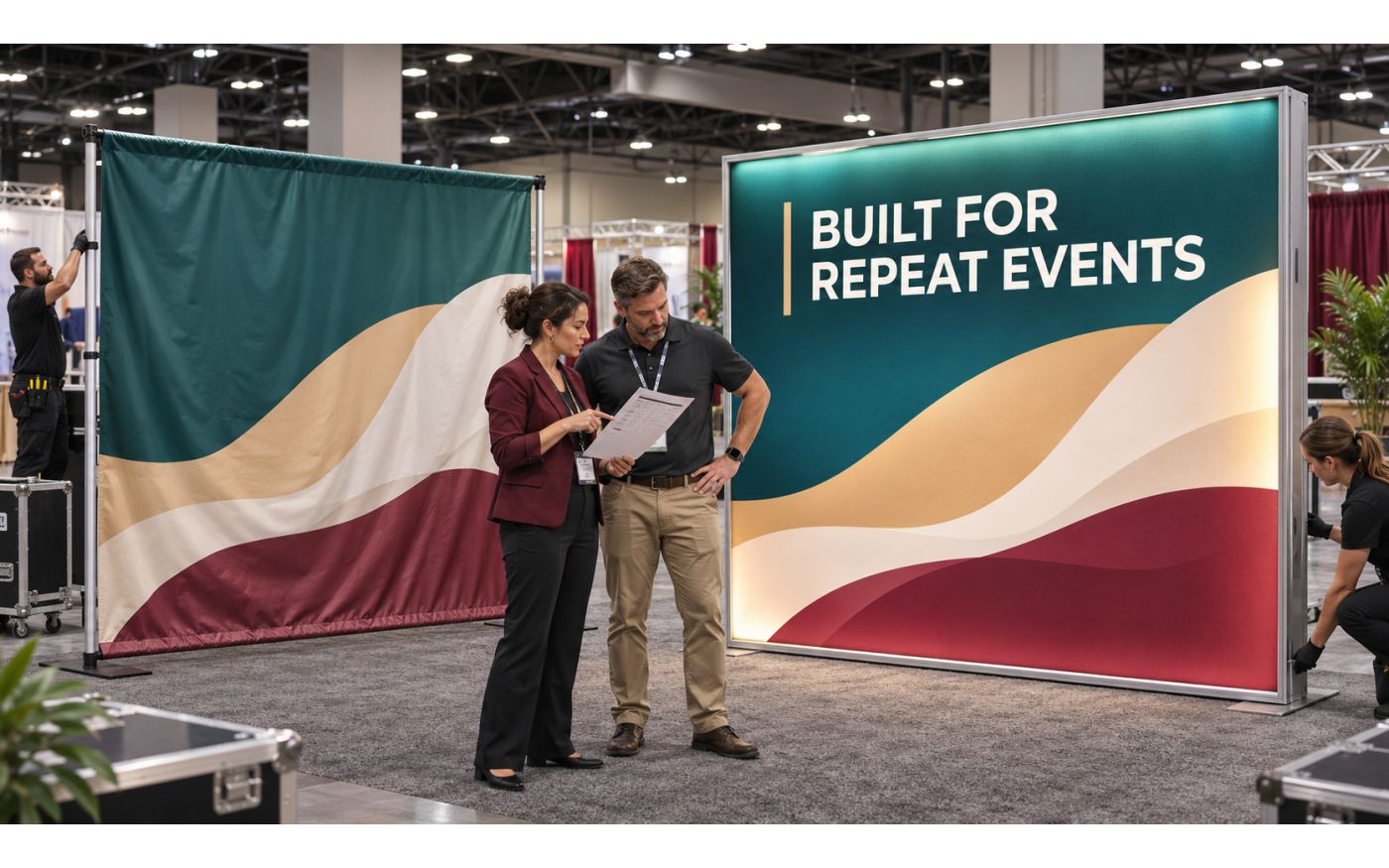
SEG backwalls are often the better choice for repeat events, changing campaigns, and premium indoor displays. Traditional banner backwalls can be more practical for one-time events, limited budgets, and projects that need a simple display system.
The right choice depends on more than appearance. Buyers should compare setup, shipping, graphic replacement, venue requirements, and the total cost across all planned events.
SEG is sometimes described as frameless, but it still uses an aluminum frame. The silicone edge sits inside a narrow frame channel, creating a clean edge-to-edge appearance. Traditional banner backwalls use more visible attachment methods, such as pole pockets, hooks, clamps, or Velcro.
How the Two Backwall Systems Work
An SEG backwall uses a printed fabric graphic with a flexible silicone strip sewn around its perimeter. The strip is pressed into a channel in an aluminum frame. When installed correctly, the fabric remains under even tension and forms a smooth display surface.
SEG systems can be non-lit or backlit. Non-lit systems rely on lighting inside the venue. Backlit systems place LED lighting behind fabric designed to transmit and diffuse light.
A traditional banner backwall normally uses a vinyl or fabric banner attached to a portable frame. The graphic may hang from pole pockets, hooks, clamps, bungees, or Velcro. Some attachment points may remain visible after setup.
Both systems can be reused. The main differences are how the graphic connects to the hardware and how the system handles future campaign changes.
SEG and Traditional Banner Backwalls Compared
A display can look good in a product photo but still create problems during shipping, setup, or repeat use. Trade buyers should compare the complete working system rather than the printed graphic alone.
Appearance and Finish
SEG fabric fits inside the frame channel, hiding the sewn edge and most attachment hardware. This produces an edge-to-edge printed surface with a soft, matte finish. The fabric can also reduce glare under convention hall lighting.
Traditional banner backwalls have a more visible frame and attachment system. Vinyl may show hems, pole pockets, or soft waves. Fabric banners can appear smoother, but the result depends on the frame and how evenly the material is tensioned.
A traditional system can still look professional when the graphic fits correctly and the frame remains stable. SEG is usually preferred when the client wants a cleaner, more integrated appearance.
Setup and Breakdown
A basic banner backwall may have fewer parts. The team assembles or extends the frame and then attaches the banner using the required finishing method.
An SEG display requires the aluminum frame to be connected correctly before the graphic is installed. The silicone edge should be inserted according to the instructions for that model so tension remains even.
If one section feels too tight, check the frame connections, graphic orientation, and channel before applying more force. Pulling or forcing the graphic can affect alignment or damage the sewn edge.
Backlit systems add lighting and power connections. The team should test the lights before completing the installation. Setup time and labor requirements vary by product, so buyers should review the instructions for the exact system.
Shipping and Storage
Fabric graphics can usually be folded and packed into a relatively small space. They should be kept clean, dry, and separate from hardware that could snag the material.
Vinyl banners may need to be rolled to reduce fold lines. Large rolled graphics can require long shipping tubes, while folded vinyl may arrive with visible creases.
Hardware affects the shipment as much as the graphic. An SEG system may include frame sections, connectors, feet, lights, power supplies, and carrying cases. Compare the packed dimensions, number of packages, and weight before estimating freight, drayage, vehicle space, or storage.
For repeat events, label the frame sections and keep small parts in assigned compartments. A missing connector or power supply can prevent the display from being used.
Graphic Replacement and Reuse
Both systems can accept replacement graphics, but each replacement must match the hardware.
A traditional banner must have the correct width, height, and finishing. A banner made with pole pockets may not fit a frame designed for hooks or Velcro.
SEG graphics require more exact compatibility. The finished dimensions, fabric stretch, silicone edge, frame channel, and lighting configuration can all affect the fit. Two products described as 10 ft SEG displays may use different graphic measurements.
Keep the product model, artwork template, order details, and approved production files. These records make reordering easier and reduce the risk of purchasing an incompatible graphic.
Reuse also depends on handling. Remove graphics carefully and store them away from dirt, moisture, sharp hardware, and heavy objects.
Upfront and Long-Term Cost
Traditional banner backwalls usually have a lower initial price. They can make sense when the display is needed for one event or when the customer does not expect to update the message.
SEG systems may cost more at the beginning because of the aluminum frame, fitted fabric, and optional lighting. Backlit systems can also add power supplies, electrical service, and additional shipping weight.
For repeat events, the cost comparison may change. A compatible SEG frame can remain in use while the graphic is replaced for a new product, market, or campaign.
Compare the cost across the expected number of events. Include hardware, graphics, replacement graphics, shipping, drayage, setup labor, electrical service, storage, and replacement parts.
SEG is not automatically less expensive over time. Its value depends on how often the frame is reused and whether future events can use the same dimensions and configuration.
Which Backwall Fits Your Project
The right system should match the event frequency, available space, budget, visual standard, and transportation plan.
Traditional Banner Backwalls for One-Time Events
A traditional banner backwall can work well for a one-time conference, temporary promotion, sponsor wall, or community event. It provides a large graphic area without requiring a more complex system.
This option may also suit customers who need the lowest practical starting cost. Confirm that the frame is stable, the banner uses the correct finishing, and the complete display fits the assigned space.
Consider the viewing environment as well. Strong overhead lighting may create glare on some vinyl materials, while folds or uneven tension may become more visible from certain angles.
SEG Backwalls for Repeat Events and Campaigns
SEG is a strong choice for companies attending several events with the same booth size. The frame can remain in use while the fabric graphic changes for new campaigns.
The edge-to-edge appearance also works well for clients that want a polished display without building a custom wall.
Before standardizing on a system, confirm that replacement graphics are available for the exact frame. Label each frame and store its template, specifications, and approved artwork together.
SEG provides the most value when there is a realistic reuse plan. A reusable frame offers limited savings if every event requires a different size.
Backlit SEG for Premium Indoor Displays
Backlit SEG can suit trade shows, retail interiors, product launches, and corporate events where the display needs greater visual impact.
The graphic material must be designed for backlighting. Artwork should also be reviewed under illumination because colors and dark areas may appear different when light passes through the fabric.
Backlighting introduces additional requirements. Confirm the included lights, power supply, wattage, cord placement, and access to electricity.
Venue electrical rules and service charges vary. Review the exhibitor manual before ordering power or promising a final setup to the customer.
What to Confirm Before Ordering
Check the full assembled dimensions rather than relying on a product name such as 10 ft or 20 ft. Review the width, height, depth, support footprint, visible graphic area, and production file size separately.
Confirm everything included in the package. Product photos may show lights, cases, feet, end panels, or additional graphics that are optional. Verify whether the order includes the frame, graphic, backing fabric, lighting, power supply, case, and setup accessories.
For replacement SEG graphics, provide the exact frame model and finished graphic size. Do not assume that frames from different suppliers use the same channel, silicone edge, or tension requirements.
Check whether the display is single-sided or double-sided and whether it is intended for indoor or outdoor use. Do not place an indoor display outdoors unless the complete system is approved for those conditions.
Review venue rules for booth height, electrical work, cord placement, support, and fire safety documents. Hanging structures require separate rigging approval.
Obtain the correct template before artwork begins. Confirm the dimensions, bleed, safe area, color mode, and file format. Allow time for customer approval, production, shipping, and a test setup before the event.
Wholesale SEG Displays From 777Sign
777Sign supplies Wholesale SEG Displays for registered trade customers, including print resellers, sign shops, marketing agencies, and event professionals.
Available options include backlit and non-lit SEG systems in different sizes. Buyers should review each product’s dimensions, viewing sides, lighting, graphic requirements, hardware, and package contents.
Replacement graphics must match the intended frame. Confirm the finished size, fabric type, silicone edge, channel, and lighting configuration before ordering for an existing system.
777Sign focuses on production. Customers are responsible for submitting complete, print-ready artwork based on the correct product template. Review the files and specifications carefully before releasing the order to production.
Final Thoughts
Traditional banner backwalls remain practical for one-time events, simple installations, and limited budgets. SEG backwalls are generally better suited to repeat events, changing campaigns, and clients that want an edge-to-edge fabric appearance.
Backlit SEG can create greater visual impact, but it also adds lighting, power, shipping, and venue requirements.
Choose based on the complete project. Confirm dimensions, included components, graphic compatibility, packing details, artwork requirements, and venue rules before ordering.
Trade buyers can register for a 777Sign account to review SEG products and available wholesale ordering options.
Frequently Asked Questions
Is SEG the Same as Tension Fabric?
SEG is one type of tensioned fabric display. Its silicone edge fits into an aluminum channel. Pillowcase tension fabric pulls over a tubular frame and usually closes with a zipper.
Can an SEG Display Be Used Without Lighting?
Yes. Non-lit SEG displays use the same silicone-edge attachment method without internal lighting. They work best in spaces with suitable ambient or external lighting.
Can SEG Graphics Be Double Sided?
Some SEG frames support graphics on both sides, but not every model does. Confirm the frame configuration and whether the order includes a second printed graphic or a blank backing fabric.
Can SEG Fabric Be Cleaned?
Cleaning depends on the fabric, ink, and finishing. Follow the supplier’s care instructions and test any cleaning method on a less visible area first.
Recommended Reading