LED Light Box Displays for Trade Shows: Types, Uses, and Buying Guide
LED light box displays can make printed graphics more visible in a busy trade show hall. They work especially well for product launches, reception areas, booth entrances, and branded backwalls.
However, not every light box uses the same graphic, frame, or lighting system. Buyers must consider the display location, viewing direction, available power, transportation plan, and expected number of events.
This guide explains the main LED light box formats and the specifications trade buyers should check before ordering.
How LED Light Box Displays Work
An LED light box uses internal LEDs to illuminate a physical printed graphic. It does not display digital content or video like an LED video wall.
The frame may hold backlit film, an acrylic-covered insert, or fabric. Large trade show light boxes often use silicone edge graphics, known as SEG. The silicone strip around the fabric fits into a channel in the aluminum frame and holds the graphic under tension.
Depending on the model, LEDs may sit around the frame edges or behind the graphic. The frame depth, light placement, diffuser, and graphic material all affect how evenly the surface is illuminated.
Some light boxes have one viewing face. Others support graphics on both sides for locations where visitors approach from multiple directions. Always confirm the exact configuration because a product photo may show options that are not included in the base package.
LED Light Box Types and Best Uses
Light boxes are available in several sizes and mounting formats. The best option depends on where the message needs to appear within the booth.
| Display Type | Best Uses | Common Graphic Type |
|---|---|---|
| Tabletop or Counter Light Box | Reception counters, product displays, and check-in areas | Backlit film or printed insert |
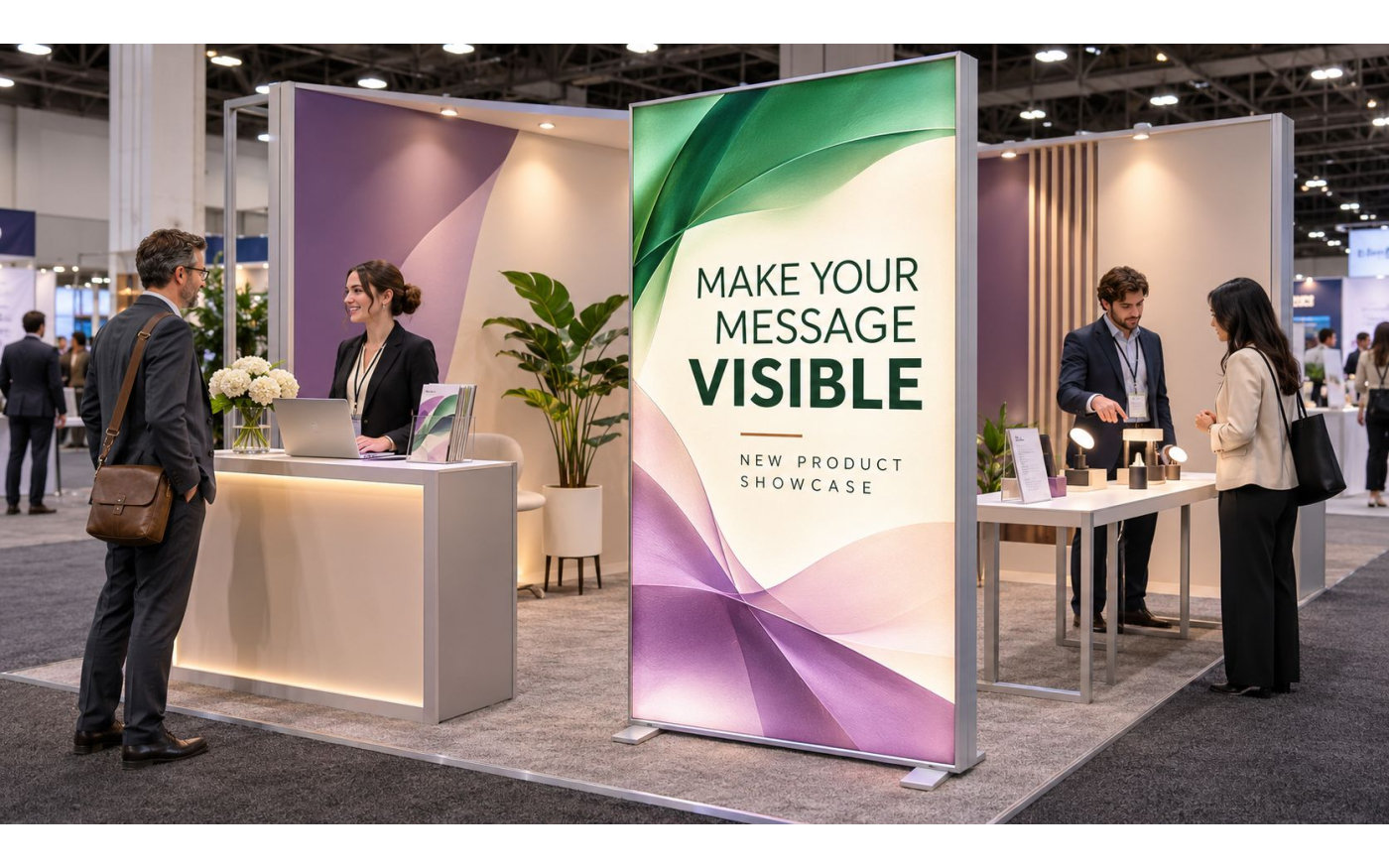
| Freestanding LED Display | Booth entrances, product stations, and directional messages | Translucent film or backlit graphic |
| LED A-Frame | Aisles, entrances, and floor-level promotions | Backlit printed insert |
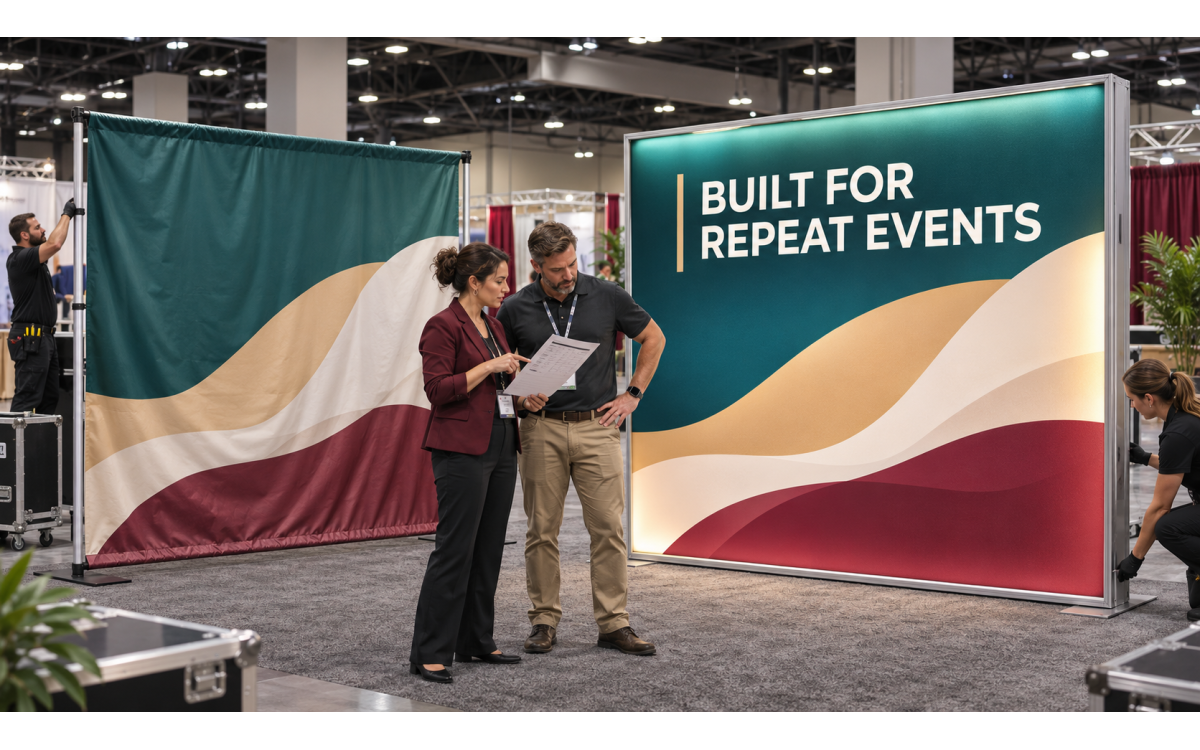
| Backlit SEG Wall | Main booth backwalls, product launches, and repeat events | Silicone edge backlit fabric |
| Hanging Light Box | Overhead branding and areas with limited floor space | Backlit film, acrylic insert, or SEG fabric |
Tabletop and Counter Light Boxes
Tabletop light boxes are designed for close viewing. They can display product information, a logo, a promotion, or directional content on a reception counter or demonstration table.
Their compact size makes them easier to transport than a full-height display. They are useful when the main backwall already carries the brand message and the booth needs additional information near a product or check-in point.
Before ordering, check the base footprint, insert size, viewing angle, cord location, and available counter space. The graphic should use larger text than a brochure because visitors may still view it from several feet away.
Freestanding and A-Frame Displays
A freestanding LED display raises the message closer to eye level. It can work near a booth entrance, product station, registration area, or service counter.
An LED A-frame presents the graphic closer to the floor and may suit an aisle-facing promotion or directional message. Keep the complete footprint out of required walkways and accessible routes.
Confirm whether the product is single-sided or double-sided. A single-sided display may be enough when placed against a wall, while a double-sided format can serve traffic approaching from two directions.
Freestanding products should remain stable on the intended floor surface. Do not assume an indoor light box is safe for outdoor use simply because it has a weighted base.
Backlit SEG Walls
Backlit SEG walls provide a larger illuminated surface for a main booth message. They combine an aluminum frame, internal LEDs, and a tensioned fabric graphic.
This format can suit product launches, premium exhibits, photo areas, and repeat event programs. The fabric hides its finished edge inside the frame channel, creating an edge-to-edge appearance.
Large systems require more planning than a tabletop display. Buyers should check the assembled dimensions, frame depth, power requirements, number of packages, case options, and setup instructions.
Trade buyers comparing large illuminated backwalls can review Wholesale Backlit SEG Displays for available configurations. Match replacement graphics to the exact frame rather than ordering by the nominal display size alone.
Hanging Light Boxes
Hanging light boxes place an illuminated message above a counter or display area. Smaller models may hang from their own stand, while large overhead structures can require approved rigging.
This format saves floor space and can improve visibility when furniture, visitors, or other displays block lower graphics.
Confirm the mounting method, display weight, viewing sides, power connection, and required clearance. Large suspended structures may require drawings, rated hardware, advance approval, and installation by authorized venue labor.
A small hanging product and a large overhead trade show sign should not be treated as the same installation project.
What to Compare Before Buying
A useful comparison should cover the full system, not only the brightness or appearance of the graphic.
Display Size and Viewing Direction
Start with the available booth space and the position of the audience. A countertop message read from a few feet away needs a different format from a backwall viewed across an aisle.
Check the assembled width, height, depth, and support footprint. The visible graphic area, frame dimensions, and production file size may all be different.
Determine whether visitors will approach from one direction or several. This helps decide between single-sided and double-sided products.
Do not fill a large illuminated surface with excessive text. Use a clear headline, a strong image, and only the supporting information that can be read at the expected distance.
Graphic Type and Replacement Method
Smaller light boxes may use translucent film or a printed insert behind an acrylic cover. Larger trade show systems often use backlit fabric or SEG graphics.
Each graphic must match the intended frame. Check the finished size, material, thickness, edge construction, and installation method before ordering a replacement.
Backlit artwork may appear different when illuminated. Dark areas, gradients, and brand colors should be reviewed with the lighting effect in mind.
Keep the approved artwork, template, product model, and previous order details. These records make repeat orders easier and reduce the risk of using an incompatible insert.
Lighting and Power Requirements
Confirm the voltage, wattage, power supply, plug type, cord length, and number of required outlets. Do not assume that power is included with the booth space.
Some models may support dimming, while others operate at a fixed output. Only promise adjustable brightness when the selected product supports it.
The final result also depends on ambient light. A display that looks bright in a dark room may appear less prominent under strong convention hall lighting.
Plan the cord route before setup. Cords should not cross visitor paths or create a tripping hazard. Venue electricians may be required to install or connect certain electrical services.
Setup, Shipping, and Storage
Review how the frame connects and whether the display requires tools. Larger systems may need more than one person, especially when the graphic, lighting components, or frame sections are difficult to handle alone.
Request the packed dimensions, number of cases, and weight of each package. These details affect parcel shipping, freight, drayage, vehicle space, and storage.
Protect graphic inserts from scratches, folds, moisture, and pressure. LED components, power supplies, connectors, and mounting hardware should have assigned storage locations.
A test setup before the first event can identify missing parts, uneven lighting, graphic fit problems, or damaged connections while there is still time to respond.
Total Cost and Repeat Use
The initial product price does not represent the complete project cost. Include the printed graphics, hardware, lighting, cases, shipping, drayage, electrical service, setup labor, storage, and replacement parts.
A simpler non-lit display may cost less for a one-time event. An LED light box may provide better long-term value when the hardware will be reused and only the printed message changes.
Calculate cost per show by dividing the expected total cost by the realistic number of events. Do not assume future reuse if the booth size, layout, or campaign requirements are likely to change.
Also check the availability of replacement graphics, power supplies, lights, and connectors. A reusable display is more valuable when compatible parts can still be obtained.
What to Confirm Before Ordering
Confirm what the selected package includes. Product images may show printed graphics, stands, cases, mounting accessories, or a second display face that costs extra.
Review the assembled dimensions, visible area, production file size, orientation, and number of graphic faces. Obtain the correct artwork template before design begins.
For an SEG system, verify the fabric, finished size, silicone edge, frame channel, and lighting configuration. For an insert-style light box, confirm the required material, thickness, and access method.
Check the complete power requirements and decide where the outlet will be located. If the display is suspended, wall mounted, or connected to venue power, confirm the applicable installation rules in advance.
Ask whether the product is intended only for indoor use. Outdoor suitability must cover the entire system, including the frame, graphic, lights, connectors, power supply, and mounting method.
Finally, allow time for artwork approval, production, transportation, inspection, and a test setup. Do not schedule delivery for the same day the display is expected to go on the show floor.
Wholesale LED Light Box Displays From 777Sign
777Sign offers Wholesale LED Light Box Displays for registered trade customers, including print resellers, sign shops, marketing agencies, graphic professionals, and event companies.
Available formats include tabletop displays, desktop light boxes, LED A-frames, standing displays, hanging light boxes, window light boxes, and wall-mounted products. Large backlit SEG systems are also available for projects that require a wider illuminated graphic surface.
Review the individual product page for the exact size, viewing sides, graphic material, power source, hardware, and package contents. Features differ between products, even when they all use LED illumination.
777Sign focuses on production. Customers are responsible for preparing and submitting complete, print-ready artwork using the correct template. Check dimensions, spelling, colors, image quality, and orientation before releasing an order to production.
Final Thoughts
An LED light box should match the location, viewing direction, graphic type, transportation plan, and available power. A tabletop or standing display may be enough for product information, while a backlit SEG wall can support the main booth message.
Compare the complete cost of the system, including electrical service, shipping, setup, storage, and replacement graphics. Also verify that the selected model fits the venue and can be supported through future events.
Trade buyers can register for a 777Sign account to review products and available wholesale ordering options.
Frequently Asked Questions
Is an LED Light Box the Same as an LED Video Wall?
No. A light box uses LEDs to illuminate a physical printed graphic. An LED video wall uses electronic pixels to show digital images, animation, or video.
Can LED Light Boxes Be Dimmed?
Some models support adjustable brightness, but many operate at a fixed output. Check the product specifications before promising dimming control.
Can LED Light Boxes Be Used Outdoors?
Only use a light box outdoors when the complete system is designed for that environment. An indoor frame, power supply, or electrical connection may not be suitable for moisture or wind.
How Early Should a Trade Show Light Box Be Ordered?
Allow time for artwork preparation, proof approval, production, shipping, inspection, and a test setup. Larger systems and custom projects generally require more planning than standard small displays.
Recommended Reading
SEG Light Boxes vs. Standard LED Light Boxes