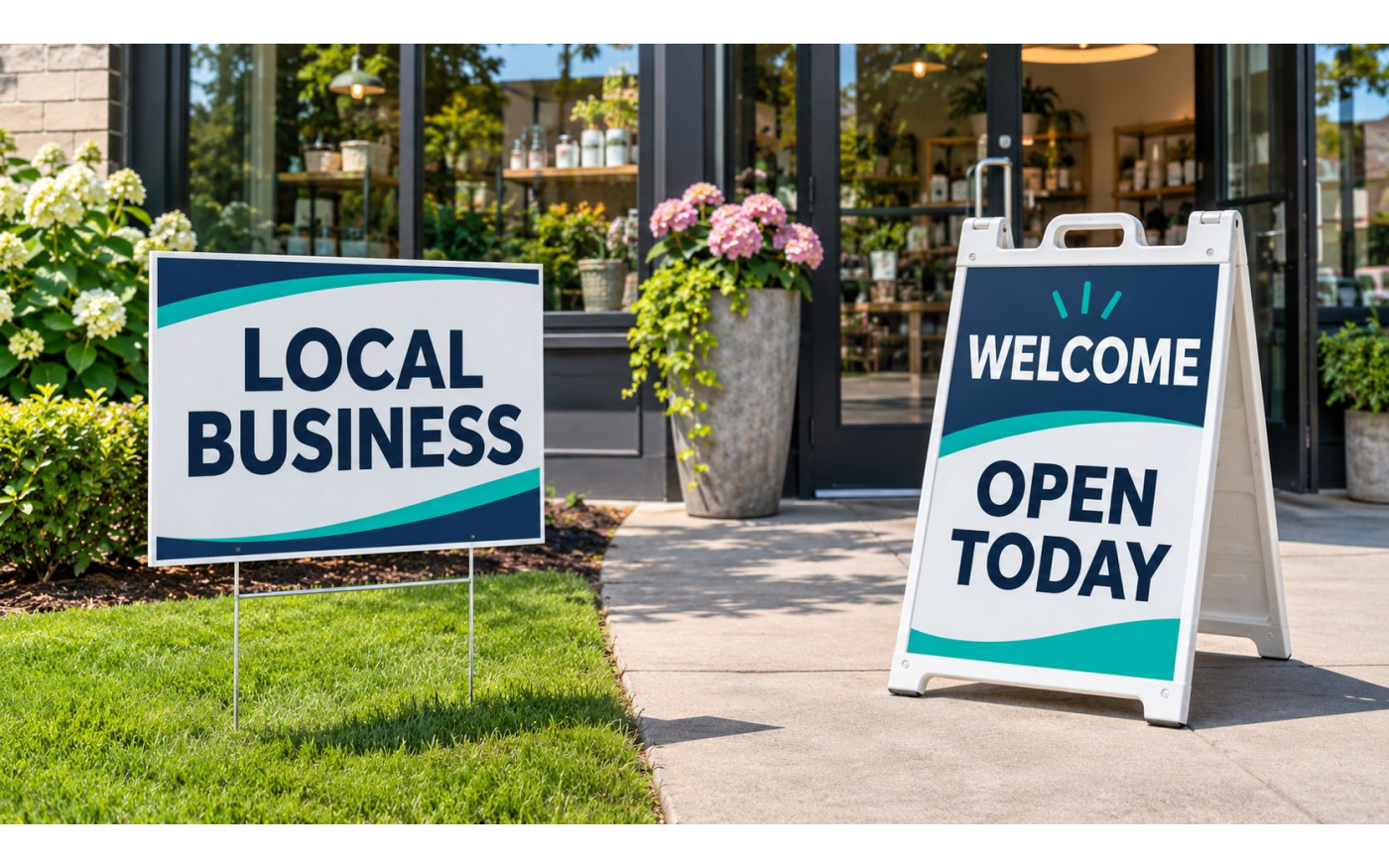
Yard signs are usually the better choice for low-cost advertising across lawns and other suitable soft ground. A-frame signs are generally better for reusable promotions near storefronts, entrances, and pedestrian traffic.
The right option depends on more than price. The placement surface, viewing distance, number of signs, weather exposure, and frequency of use can all affect the decision. A contractor promoting services across several neighborhoods has different needs from a restaurant advertising daily specials outside one location.
This guide compares the two sign types and explains where each works best. It also covers the details businesses, sign shops, and print resellers should check before ordering.
How Yard Signs and A-Frame Signs Differ
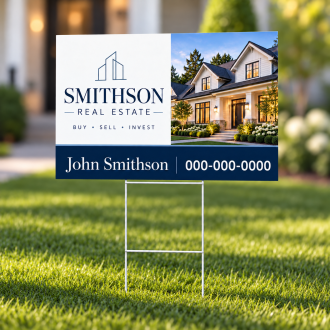
A yard sign is usually a lightweight printed panel supported by a metal stake. Corrugated plastic, often called Coroplast, is a common material because it is light, practical, and suitable for temporary outdoor advertising.
The stake is pushed into grass, soil, or another suitable soft surface. This makes yard signs useful for real estate listings, contractor projects, community events, directional messages, and local service promotions.
An A-frame sign is a freestanding display that opens into the shape of the letter “A.” It can stand on concrete, pavement, indoor flooring, and other flat surfaces without being inserted into the ground. A-frames are also called sidewalk signs or sandwich boards, although those terms can include several different display styles.
Some A-frames use printed panels that fit inside the frame. Others use adhesive graphics, banners, or writing surfaces. Models with replaceable panels allow a company to keep the frame and update only the message.
The main difference is simple: yard signs rely on a suitable soft surface, while A-frame signs support themselves on a flat surface.
Yard Signs and A-Frame Signs Compared
The following table provides a quick comparison.
| Decision Factor | Yard Signs | A-Frame Signs |
|---|---|---|
| Typical surface | Grass and suitable soft ground | Sidewalks and flat hard surfaces |
| Best audience | Local traffic and drivers | Pedestrians and storefront visitors |
| Typical quantity | Often ordered in larger quantities | Usually used in smaller quantities |
| Initial cost | Generally lower | Generally higher |
| Reuse | Can be reused when stored properly | Frame supports repeated use |
| Message updates | Replace the complete sign panel | Replace inserts when compatible |
| Storage | Flat and lightweight | Requires more storage space |
| Common uses | Real estate, contractors, directions | Retail, restaurants, entrances |
Placement Surface and Location
Start with the installation surface. A yard sign with an H-stake needs soil that can hold the stake securely. It is not a practical solution for a concrete sidewalk, paved entrance, or indoor lobby.
An A-frame is more flexible on hard surfaces. It can be placed near a storefront, registration desk, event entrance, or service counter. However, it requires enough floor space and should not block doors, walkways, accessible routes, or emergency exits.
The property itself matters as well. Businesses should confirm that they have permission to place signs on the selected land. Public sidewalks, road shoulders, shared shopping centers, and managed properties may have separate rules.
Visibility and Viewing Distance
Yard signs often target people in vehicles or people moving through a neighborhood. The message must be readable quickly. A short service name, phone number, website, or directional arrow usually works better than a detailed list.
A-frames are commonly viewed by pedestrians at a shorter distance. They can support a little more information, such as a daily offer, event schedule, menu highlight, or entrance direction. The message should still be easy to scan.
Double-sided printing is useful when people approach from two directions. Before preparing the artwork, confirm whether both sides should use the same message or different information.
A larger sign does not automatically solve a visibility problem. Contrast, type size, viewing angle, surrounding obstacles, and the amount of text are equally important.
Portability and Storage
Yard signs are lightweight and stack flat once the stakes are removed. This makes them practical for teams that deliver signs to many locations. Real estate companies and service businesses can keep several signs ready for new projects.
A-frame signs take up more storage and vehicle space. However, they are still designed to be moved between a storefront, storage room, event site, or customer location. Many businesses bring them inside after closing.
For repeat projects, buyers should check the packed size, frame weight, panel dimensions, and storage requirements. These details matter when a reseller ships several units or an event team transports displays between locations.
Weather and Stability
Neither product should be treated as suitable for every weather condition.
Yard signs depend on the condition of the ground and the way the stake is installed. Very soft soil, frozen ground, loose fill, or exposed locations may reduce stability. The panel and stake should also be checked after severe weather.
An A-frame has a wider base, but wind can still move or tip it. Stability varies by frame design, weight, placement, and weather exposure. A product described for outdoor use should not be assumed to remain safe in high winds.
Businesses should follow the product specifications and bring portable signs inside during unsafe conditions. A sign should never create a hazard for pedestrians, customers, or vehicles.
Upfront and Long-Term Cost
Yard signs generally have a lower entry cost and are easier to distribute in quantity. They are often the more economical choice when a campaign needs many signs across different properties.
A-frame signs normally require a larger initial investment because the frame is part of the system. That cost can make sense when the same frame will be used for many promotions.
The complete cost should include:
- Printed graphics
- Stakes, frames, or other hardware
- Shipping
- Storage
- Labor for deployment
- Replacement graphics
- Loss or damage
- Expected number of uses
For example, a restaurant that changes its offer every month may get more value from one reusable A-frame with compatible replacement panels. A contractor promoting services across twenty neighborhoods may benefit more from multiple yard signs.
The lowest unit price is not always the lowest cost per use.
Which Sign Fits Your Business?
The best choice becomes clearer when the project is matched to a specific location and audience.
Yard Signs for Distributed Local Advertising
Yard signs work well when a business needs several lightweight signs placed across a wider area. Common applications include:
- Real estate listings and open houses
- Roofing, landscaping, painting, and construction projects
- Community events
- School and nonprofit campaigns
- Temporary directions
- Neighborhood service advertising
- Hiring announcements
They are especially practical when the business has permission to use lawns or other suitable soft ground. A service company may place a sign at an active job site, while a real estate team may deploy several signs along an approved route to an open house.
For large campaigns, create a placement plan before ordering. Estimate how many signs are needed, where they can legally be placed, how they will be collected, and whether the same message will work at every location.
A-Frame Signs for Storefronts and Foot Traffic
A-frame signs are a stronger fit when the message needs to appear near a storefront or on a hard surface. Typical users include:
- Restaurants and cafés
- Retail stores
- Salons and fitness studios
- Medical and professional offices
- Event venues
- Pop-up shops
- Trade show and registration teams
- Property managers
An A-frame can promote a special, identify an entrance, direct visitors, or confirm that a business is open. It can be placed during operating hours and stored indoors afterward.
Businesses that update messages regularly should consider a system with replaceable panels. Before ordering new graphics, confirm the exact frame model, visible graphic area, finished panel size, and material requirements.
Using Both for Events and Service Businesses
Some projects benefit from both products.
Yard signs can guide drivers from nearby streets or parking areas. An A-frame can then direct pedestrians at the final entrance. This creates a simple wayfinding system without forcing one sign type to handle every location.
A contractor could use yard signs at approved job sites and an A-frame near a temporary consultation area. An event organizer could use yard signs along grassy approach routes and A-frames on paved walkways.
When combining products, keep colors, typography, arrows, and naming consistent. Each sign should perform one clear job within the overall route.
What to Confirm Before Ordering
A short pre-order review can prevent incorrect products, unusable graphics, and delayed customer projects.
First, confirm the location:
- Is the surface grass, soil, concrete, pavement, or indoor flooring?
- Will the sign be viewed by drivers, pedestrians, or both?
- From which directions will people approach?
- Will cars, plants, crowds, or street furniture block the message?
- Is the location exposed to wind?
Next, confirm the product specifications. Check the finished size, printed sides, graphic material, frame or stake options, and whether the required hardware is included.
For an A-frame with replaceable graphics, do not order by the outside frame dimensions alone. The replacement panel must match the compatible size, thickness, and installation method.
Businesses should also review local and property requirements. A city, landlord, shopping center, event venue, or homeowners association may restrict portable signs. The display should not block pedestrian routes, driveways, intersections, doors, or emergency access.
Finally, prepare the production file correctly. 777Sign is a production provider, so customers should supply professional print-ready artwork based on the correct template and product specifications. Check spelling, phone numbers, URLs, arrows, bleed, image resolution, and front-and-back orientation before submission.
For repeat orders, save the approved artwork, product code, finished size, hardware selection, proof, and job details. Clear records make it easier to reproduce signs or order compatible replacement graphics.
Wholesale Outdoor Signs From 777Sign
777Sign supplies trade customers with printed outdoor display products for resale, business promotions, real estate projects, and event signage.
Trade buyers can explore wholesale outdoor business signs, including yard signs and portable A-frame options for different placement conditions. Yard signs provide a lightweight solution for suitable soft ground, while A-frames support storefront, entrance, and hard-surface applications.
The custom yard sign option is printed in full color on 4 mm white Coroplast. Buyers can select the size, printed sides, H-stake option, turnaround, and quantity based on the project.
Before ordering, confirm the product specifications and download the correct template when available. Customers are responsible for submitting professional print-ready files. For replacement graphics, verify the existing frame and panel requirements instead of relying only on a general size description.
This process is particularly important for sign shops, print resellers, agencies, real estate companies, and multi-location businesses managing several versions or repeat orders.
Final Thoughts
Yard signs are usually the better option for affordable, distributed advertising on lawns and suitable soft ground. They work well for real estate, contractors, local services, events, and directional campaigns.
A-frame signs are generally better for reusable messages near storefronts, entrances, and pedestrian traffic. Their higher initial cost may provide better long-term value when the frame is reused with compatible replacement graphics.
Do not choose by price alone. Check the placement surface, viewing distance, number of locations, weather exposure, storage needs, local rules, and expected number of uses.
When one project includes both grassy areas and paved entrances, using both sign types may provide the clearest result. Each sign can then perform the job it handles best.
Register for a 777Sign trade account to review available products and prepare an order using your professional print-ready artwork.
Frequently Asked Questions
Can Yard Signs Be Used Without Grass?
Standard H-stakes require suitable soft ground. For concrete, pavement, or indoor flooring, choose a compatible freestanding display instead of trying to force a yard sign stake into the surface.
Can A-Frame Sign Panels Be Replaced?
Some A-frame systems accept replacement panels, while others use permanent graphics. Confirm the frame model, panel size, thickness, and installation method before ordering new graphics.
Should Outdoor Signs Include a QR Code?
A QR code can help pedestrians reach a menu, booking page, or offer. It is less useful when the main audience is driving and cannot safely stop to scan it.
Can A-Frame Signs Be Left Outside Overnight?
It is usually safer to bring portable signs inside after business hours. This reduces exposure to severe weather, theft, accidental movement, and unauthorized use of public space.